


About the Loop
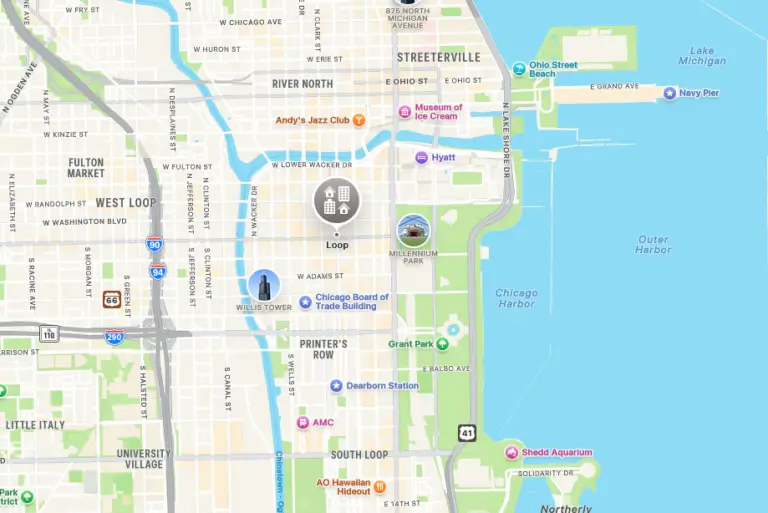
The Loop is Chicago’s bustling downtown district, serving as the city’s central business, cultural, and transportation hub. Home to approximately 33,000 residents, the neighborhood is defined by its iconic skyline, historic architecture, and dynamic mix of commerce, arts, and entertainment. Located at the heart of the city, the Loop is both a workplace for hundreds of thousands and a residential community for those seeking urban living with unparalleled convenience.
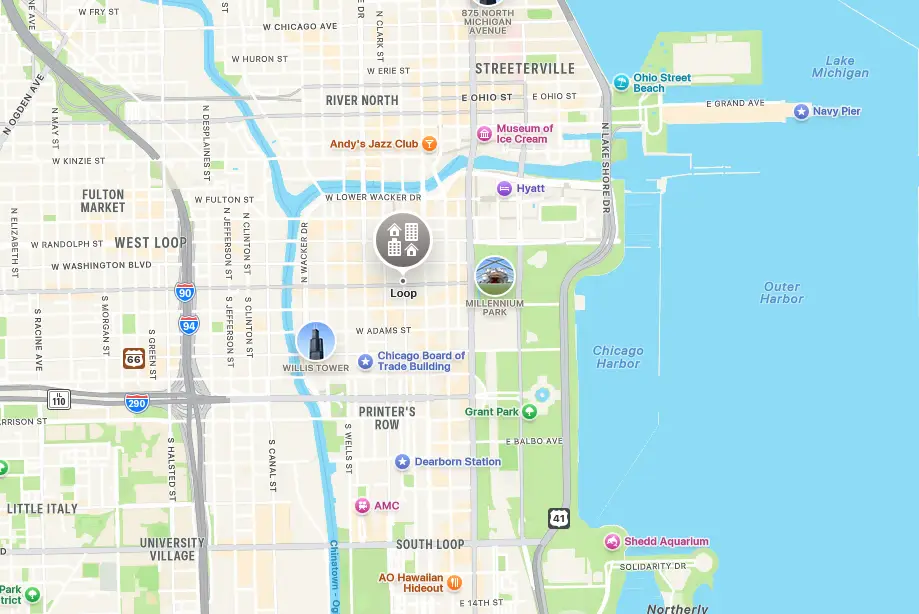
The Loop’s history dates back to the 19th century, when the area developed as Chicago’s commercial core. Its name derives from the elevated “L” train that forms a loop around the central business district. Many historic landmarks, such as the Chicago Board of Trade Building, the Monadnock Building, and the Rookery, reflect the neighborhood’s architectural heritage. Over the decades, the Loop has transformed from primarily a commercial and financial district to a mixed-use neighborhood with residential options, retail, and cultural institutions.
Housing in the Loop is dominated by high-rise apartment buildings and condominiums, offering modern amenities and city views. While the area is less suburban in feel compared to other Chicago neighborhoods, its high-density living appeals to professionals, empty nesters, and young urbanites who prioritize proximity to work, transit, and cultural amenities. Residential developments in the Loop continue to expand, reflecting demand for downtown living.
The neighborhood is culturally diverse, attracting residents from various ethnic and professional backgrounds. Median household income is relatively high, reflecting the concentration of professionals, executives, and those employed in finance, law, and corporate sectors. Despite its urban density, the Loop maintains parks, plazas, and public spaces that support community life.
Education in the Loop is served by public schools like Ogden International School, as well as private and charter schools in nearby neighborhoods. The area also benefits from proximity to higher education institutions such as DePaul University’s Loop Campus and Roosevelt University, which bring students, faculty, and cultural activities into the district.
Economically, the Loop is Chicago’s core for business and commerce. It houses major financial institutions, corporate headquarters, law firms, and government offices. The retail and hospitality sectors thrive here, with shopping centers, hotels, and restaurants supporting both residents and visitors. The neighborhood’s robust economy contributes to a high level of employment and vibrancy.
Recreation and culture are central to life in the Loop. Millennium Park, Grant Park, and Maggie Daley Park provide green space, trails, and public art installations. The Art Institute of Chicago, Chicago Symphony Center, and Chicago Cultural Center offer world-class arts and cultural experiences. Seasonal festivals, concerts, and public events create a lively atmosphere for both residents and visitors.
The Loop is characterized by its energy, accessibility, and iconic city identity. With extensive transit connections, including the CTA “L” trains, buses, Metra, and proximity to major highways, residents enjoy unmatched connectivity. The neighborhood is also highly walkable, encouraging active urban living.
For those seeking a vibrant, urban lifestyle at the heart of Chicago, the Loop offers an unparalleled combination of historic architecture, cultural amenities, world-class business opportunities, and high-rise living. Its unique blend of residential, commercial, and cultural elements makes it a one-of-a-kind neighborhood in the city.