


About Dunning
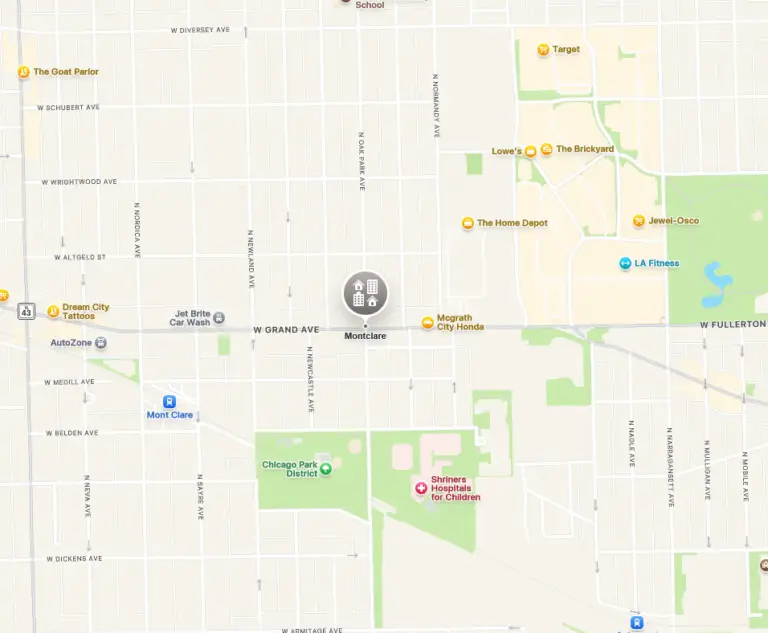
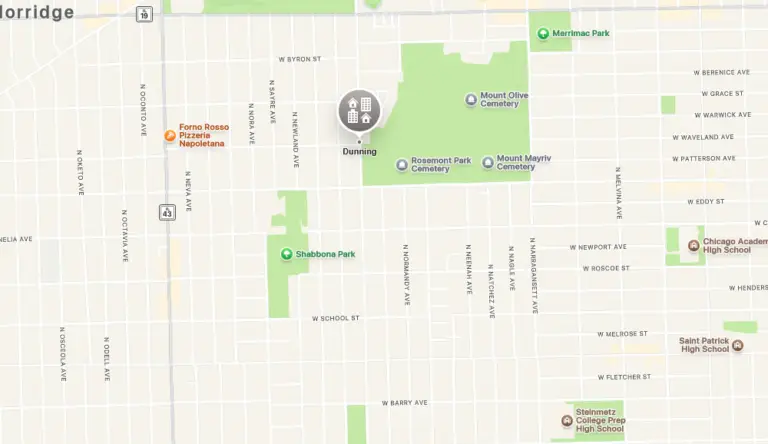
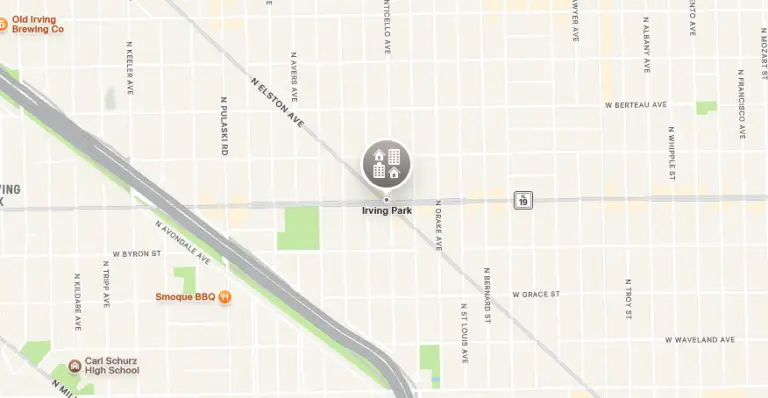
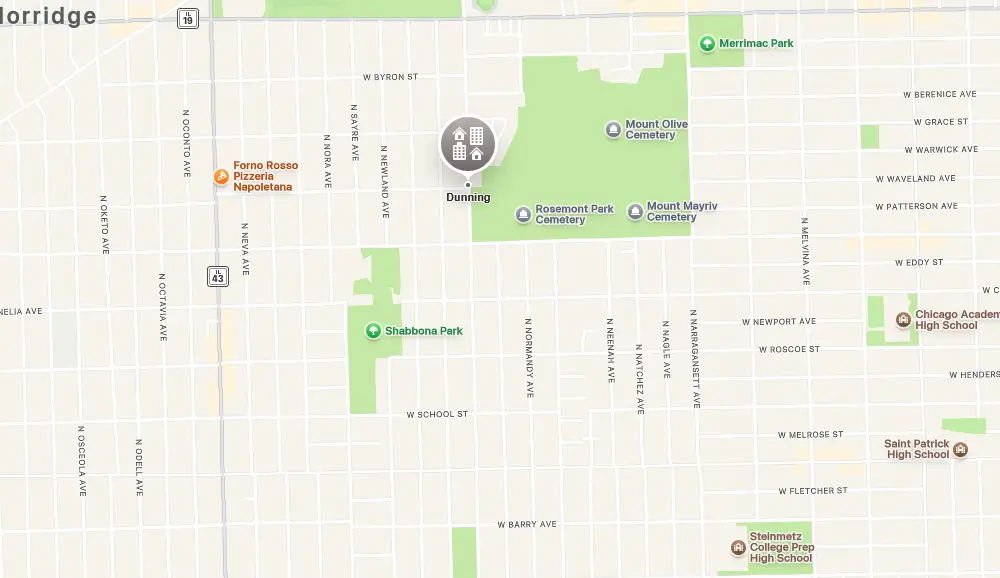
Dunning is a quiet, residential neighborhood located on Chicago’s far Northwest Side. Home to roughly 11,000 residents, the community is known for its suburban feel, strong sense of community, and convenient access to both city amenities and natural spaces. Bordered by neighborhoods such as Irving Park, Montclare, and Harwood Heights, Dunning offers a peaceful environment while remaining part of Chicago, making it attractive to families, professionals, and longtime residents seeking stability and comfort.
Dunning’s history dates back to the late 19th century when the area was primarily farmland and lightly populated. The neighborhood began to develop as a residential community with the growth of streetcar lines and commuter rail access, attracting middle-class families seeking suburban-style living within the city. Many homes built in the early to mid-20th century, brick bungalows, two-flats, and single-family houses still define the neighborhood today.
Housing in Dunning is largely composed of single-family homes, complemented by two-flats and small apartment buildings. Tree-lined streets, spacious lots, and quiet blocks give the neighborhood a suburban atmosphere unusual in an urban environment. High rates of homeownership contribute to neighborhood stability and foster long-term community connections. Housing prices remain relatively affordable compared to many North Side neighborhoods, making Dunning an appealing option for families and first-time buyers.
The neighborhood is culturally diverse, with residents representing a mix of working- and middle-class households. Historically home to Polish and German immigrants, Dunning has gradually grown more ethnically diverse over the years. Median household income is near the city average, supporting local businesses, community services, and public amenities.
Education is a central part of life in Dunning. The neighborhood is served by several Chicago Public Schools, including Hiawatha Elementary School and Taft High School, with options for private and parochial education nearby. Schools are a major draw for families, providing quality academic and extracurricular opportunities.
Economically, Dunning is primarily residential, with local businesses and retail along major streets such as Irving Park Road and Harlem Avenue. Restaurants, shops, and service-oriented businesses cater to residents’ daily needs. Many residents commute to downtown Chicago or nearby suburbs using the Blue Line, Metra, and nearby expressways, giving the neighborhood excellent transit access.
Recreation and green space enhance Dunning’s appeal. The neighborhood has several parks, athletic fields, and playgrounds, as well as nearby forest preserves offering walking, biking, and outdoor recreation. Community programs, local events, and neighborhood clubs foster social interaction and a sense of belonging among residents.
Dunning is known for its strong community identity and civic engagement. Active block clubs, neighborhood associations, and local events contribute to a tight-knit and family-friendly atmosphere. Residents often cite the neighborhood’s safety, tranquility, and stability as key reasons for choosing to live there.
For those seeking a quiet, family-oriented neighborhood within the City of Chicago, Dunning offers a unique combination of suburban comfort, accessible amenities, strong schools, and community pride. Its peaceful streets, welcoming environment, and long-term stability make it a desirable neighborhood on Chicago’s Northwest Side.