


About Aurora
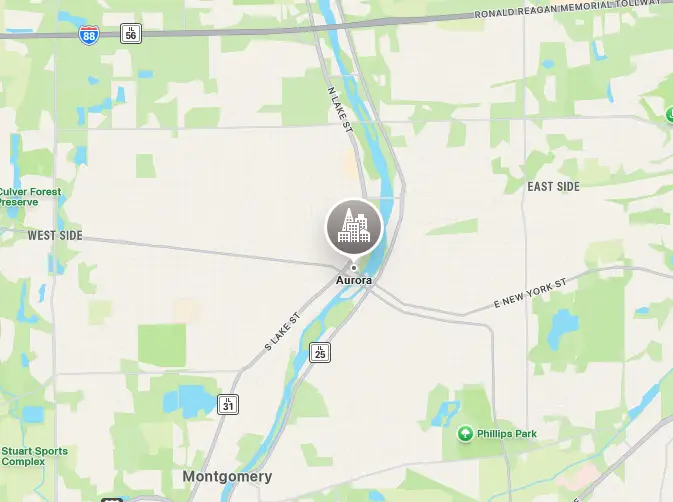
Aurora, Illinois is one of the Midwest’s most dynamic and diverse communities. Straddling DuPage, Kane, Will, and Kendall counties, Aurora is best known for its blend of historic charm, cultural richness, economic opportunity, and family‑friendly living. With a population of more than 200,000 residents, making it the second largest city in Illinois, Aurora offers the scale and amenities of a major city while still preserving welcoming neighborhoods and strong community identity.
Aurora’s roots date back to the early 19th century when settlers were drawn to the area’s fertile land and the Fox River, which became the backbone of early industry. The settlement was originally called Schneider’s Mill after early settler George Schneider who built a gristmill on the river in 1834. The town was renamed Aurora in 1837, a nod to the Roman goddess of dawn, symbolizing a place of new beginnings. By the mid‑1800s, the Fox River powered mills, factories, and workshops, turning Aurora into a thriving industrial center. The arrival of railroads connected the community to Chicago and other markets, accelerating growth and setting the stage for the city it is today.
Aurora’s history is visible in its well‑preserved architecture, particularly in the Aurora Historic Districts, where Victorian, Queen Anne, and early 20th‑century styles line charming residential streets. The Paramount Theatre, an Art Deco landmark from the 1930s, is a cultural anchor in downtown Aurora, hosting national touring acts, theater productions, concerts, and special events. Throughout the city’s evolving history, Aurora has managed to balance innovation with preservation, making it a place that values both its heritage and its future.
Diverse and energetic, Aurora is home to a rich mosaic of cultures and backgrounds. The community’s inclusive character is reflected in its population, which includes a variety of ethnicities, languages, and traditions. Residents enjoy a relatively affordable cost of living compared to Chicago proper, with housing options ranging from historic homes in established neighborhoods to new subdivisions, townhomes, and condominiums. This diversity of housing makes Aurora appealing to first‑time buyers, growing families, and active adults alike.
Education is an important part of life in Aurora. The city is served by several school districts, including Indian Prairie School District 204, one of the largest and highest‑performing in the state and West Aurora School District 129, well respected for its wide array of academic and extracurricular programs. High school options such as Naperville North High School, Naperville Central High School, and Aurora’s own West Aurora High School offer strong curriculum choices, advanced placement courses, athletics, and arts programs. Numerous elementary and middle schools support early education and community learning, and families can also choose from private and parochial school options.
Aurora’s convenient position in the Chicago metro area makes it an ideal location for professionals and commuters. The city is served by Metra’s BNSF Railway Line, offering direct access to downtown Chicago. Major highways, including Interstate 88 and Interstate 355, provide easy commuting to jobs throughout the region. In addition to commuter options, Aurora supports a vibrant local economy with employers in healthcare, education, manufacturing, logistics, and retail sectors. Key local employers include Aurora University, Rush‑Copley Medical Center, AMITA Health St. Joseph Hospital, FLEX Ltd., and a variety of corporate and industrial partners that contribute to a broad employment base.
Aurora’s growth has brought with it an expanding roster of amenities and cultural attractions. The revitalized Aurora Downtown Arts District is a hub of creativity, featuring galleries, studios, public art installations, and community events like Art and Soul, AudacityFest, and the annual Fox Valley Folk Festival. The Paramount Theatre Center for the Arts anchors this district, drawing audiences from across the region.
Outdoor recreation thrives thanks to Aurora’s proximity to the Fox River Trail, which runs through parks, natural areas, and scenic riverfront spaces. The Aurora Park District manages more than 2,500 acres of parks and facilities that support sports leagues, playgrounds, picnicking, golf, swimming pools, and fitness classes. Notable outdoor spots include Phillips Park Zoo, RiverEdge Park, a riverside concert and festival venue and Baker Community Center, offering recreation and family‑oriented programs.
Aurora also celebrates its legacy through museums and historic sites. The Aurora Historical Society preserves and shares the city’s stories through exhibits, tours, and educational programs. Festivals, farmers markets, and seasonal celebrations foster neighborly connections and create opportunities for community engagement.
For young professionals, families, and retirees alike, Aurora’s combination of job opportunities, strong schools, affordable housing, cultural attractions, and outdoor amenities make it an inviting choice in the Chicago suburbs. The city manages to feel both substantial and accessible, large enough to support arts, education, and commerce, yet personal enough to retain strong neighborhood identity and community pride.
Prospective residents often appreciate Aurora’s balance of urban energy and suburban ease. With continued investment in infrastructure, community development, public spaces, and cultural offerings, Aurora is positioned not just as a place to live, but as a place to grow, connect, and thrive. Whether you’re seeking quality schools, career opportunities, or a community with rich heritage and vibrant future prospects, Aurora delivers, making it a compelling destination for anyone looking to call the Chicago area home.