


About Antioch
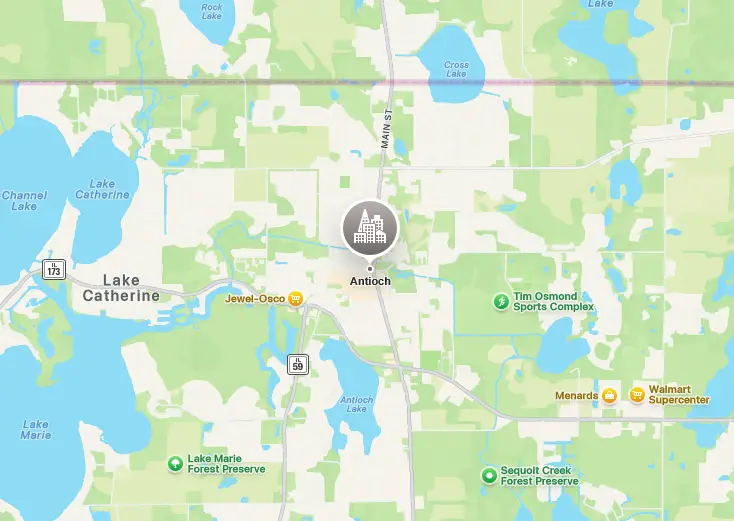
Antioch, Illinois is a charming and character‑rich village located in Lake County on the far northern edge of the Chicago metropolitan area. With a population of about 15,100 people as of 2024, Antioch offers a blend of small‑town atmosphere, outdoor recreation, and convenient access to both Chicago and Milwaukee.
The area that would become Antioch was originally inhabited by the Pottawatomi Tribe, who lived and traveled along Sequoit Creek, a name meaning “winding”—a fitting description of the natural landscape. European settlement began in the early 19th century, with the Gage brothers building the first permanent cabin in 1839 and Hiram Buttrick establishing a sawmill on Sequoit Creek that turned the settlement into an early center of commerce. In 1843, residents gave the village its biblical name “Antioch” and started a community school.
In the late 1800s, Antioch became a popular vacation destination for Chicago residents, with tourists drawn to its scenic lakes, quiet rural setting, and outdoor activities such as boating, fishing, dancing, and hunting. The arrival of the rail line in 1886 brought even more visitors and spurred economic and residential growth. Fires in the late 19th and early 20th centuries destroyed much of the downtown area, but the community rebuilt with brick structures and essential infrastructure like a public water system and a volunteer fire department.
Today, Antioch retains much of its small‑town appeal while continuing to grow and modernize. The village covers just over 8 square miles, filled with lakes, parks, and neighborhoods that blend older homes with newer developments. The median age in the village is around 37 years, and the average household size is about 2.8 people, making Antioch a community with both families and young professionals. Median household income in recent community data is approximately $118,600, which is higher than the Lake County average, and about 40 percent of households earn more than $100,000 annually.
Antioch’s residents enjoy an active and outdoors‑oriented lifestyle. The village is ideally situated near lakes of glacial origin such as Antioch Lake, Lake Marie, and Redwing Slough Lake, offering fishing, boating, and other water activities. The surrounding Chain O’Lakes region also supports hiking, camping, and wildlife observation, attracting nature lovers throughout the year.
One of the highlights of the community is its historic downtown district, which features a mix of boutique shops, restaurants, and community events. While the downtown has a quaint and traditional vibe, community leaders are actively working to revitalize it to make it an even stronger focal point for residents, visitors, and small businesses. This vision includes enhancing walkability, expanding dining and retail options, and fostering spaces where people can live, work, and play.
Education is a priority for families in Antioch. The village is served by Community High School District 117, which includes Antioch Community High School, established in 1915 and known locally for its academic, athletic, and extracurricular programs. Enrollment at the high school is just over 1,200 students, and the school motto and mascot—reflecting the Sequoit Creek heritage—are an important part of local identity. Community High School District 117 also includes Lakes Community High School in nearby Lake Villa, giving families options within the district.
Public and private elementary and middle school options are available as well, and the overall community places a strong emphasis on quality education and lifelong learning. Access to nearby higher education institutions in the greater Chicago and Lake County area expands opportunities for adult learners and professionals pursuing advanced degrees or continuing education.
Economically, Antioch’s job landscape is a mix of local businesses, light industry, and small‑to‑medium enterprises. Manufacturing and specialty products have a longstanding presence in the village. For example, Pickard China, a prestigious company known for crafting fine china used in settings such as Air Force One and Camp David, has been a local employer since 1937. Other local manufacturers and service businesses contribute to a diverse business base that supports the broader community.
Transportation options help connect Antioch to the larger region. The village is located near Interstate 94 and U.S. Route 41, making it convenient for road travel to both Chicago and Milwaukee. Since 1996, commuter rail service via Metra’s North Central Service has linked Antioch to downtown Chicago, making the village attractive to commuters who prefer suburban living with rail access to the city.
Antioch also boasts a strong sense of community. Organizations such as the Lakes Region Historical Society work to preserve local heritage and educate residents and visitors alike about Antioch’s past through events and exhibits. Community gatherings, festivals, and seasonal celebrations foster neighborly connections and a welcoming atmosphere for new and long‑time residents alike.
For someone considering moving to Antioch, the village offers a compelling balance of small‑town charm, outdoor recreation, solid schools, and a community‑oriented lifestyle. Its location near scenic lakes and parklands, combined with commuter access to Chicago, makes it appealing for families, professionals, and outdoor enthusiasts. Affordable housing and a generally stable economic profile enhance its appeal, while efforts to revitalize the downtown area point to ongoing growth and opportunity.
Whether you’re drawn by the natural beauty of the Chain O’Lakes region, the close‑knit community events and traditions, or the convenience of suburban living with urban access, Antioch presents a unique and inviting place to call home in the Chicago area.