





















About North Park
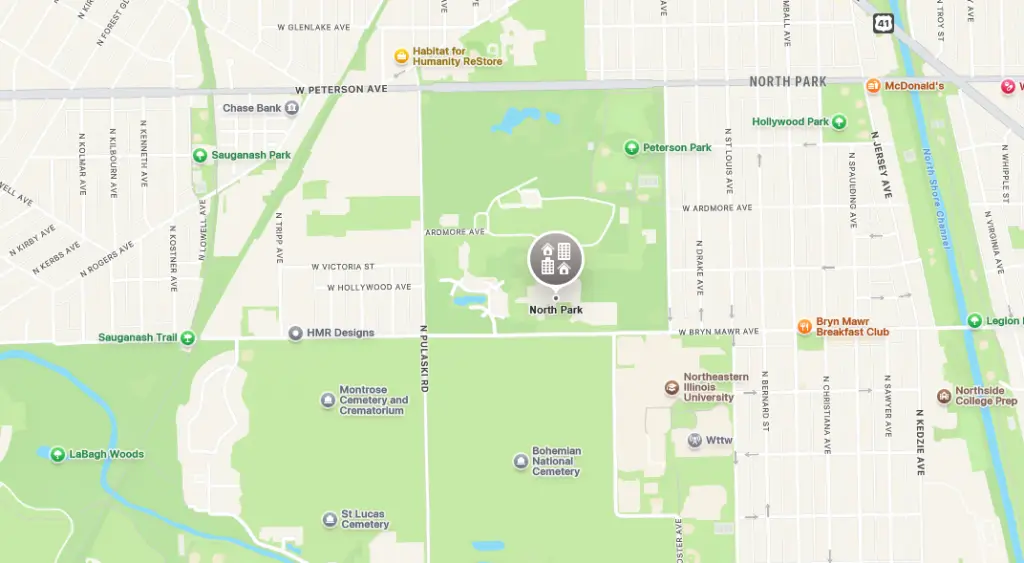
North Park is a residential and culturally diverse neighborhood located on Chicago’s far North Side, along the North Branch of the Chicago River. Home to approximately 20,000 residents, the neighborhood is known for its quiet streets, strong schools, and mix of residential, educational, and religious institutions. North Park offers a suburban feel within the city, making it attractive to families, students, and professionals who seek a balance between city access and neighborhood tranquility.
North Park’s history dates back to the late 19th and early 20th centuries, when the area developed as farmland and small residential communities. Growth accelerated with the construction of streetcar and rail lines connecting the neighborhood to downtown Chicago. Many homes built during the early to mid-20th century, brick bungalows, two-flats, and single-family houses still define the neighborhood’s character today.
Housing in North Park is primarily single-family homes, brick bungalows, and low-rise apartment buildings. Tree-lined streets and spacious lots give the neighborhood a calm, suburban atmosphere unusual in the city. Homeownership is common, contributing to the area’s stability and long-term community ties. North Park also offers some affordable rental options for students and young professionals attending nearby educational institutions.
The neighborhood is culturally diverse. Historically home to European immigrant communities, North Park now includes a mix of Asian, Middle Eastern, and Latino residents. Median household income is close to the city average, reflecting a mix of working- and middle-class households. The presence of educational and religious institutions contributes to a strong sense of community identity and civic engagement.
Education is a cornerstone of North Park. The neighborhood is home to Chicago Public Schools such as Amundsen High School and Rutherford Sayre Elementary, as well as several private and religious schools. North Park is also notable for housing North Park University, a private Lutheran university with a vibrant campus and cultural presence that influences the neighborhood. The university attracts students, faculty, and events that enrich the community.
Economically, North Park is largely residential, with retail, restaurants, and service-oriented businesses along major streets like Lawrence Avenue, Devon Avenue, and Foster Avenue. Many residents commute to jobs in downtown Chicago or nearby suburbs, using CTA bus routes and the nearby Metra station. Local businesses support daily life and contribute to the neighborhood’s community atmosphere.
Recreation and culture are accessible in North Park. Parks such as North Park Village Nature Center offer trails, wildlife areas, and educational programming. Proximity to the Chicago River and other nearby forest preserves provides opportunities for walking, biking, and outdoor activities. Community events, religious festivals, and neighborhood programs strengthen connections among residents.
North Park has produced and attracted residents who value education, community involvement, and a family-friendly environment. Its strong civic identity and mix of long-term and newer residents create a welcoming and stable neighborhood.
For those seeking a residential and culturally rich neighborhood in Chicago, North Park offers a unique combination of quiet streets, diverse populations, strong schools, and easy access to city amenities. Its suburban character, educational institutions, and community spirit make North Park a desirable place to live on Chicago’s North Side.