





















About Lincoln Square
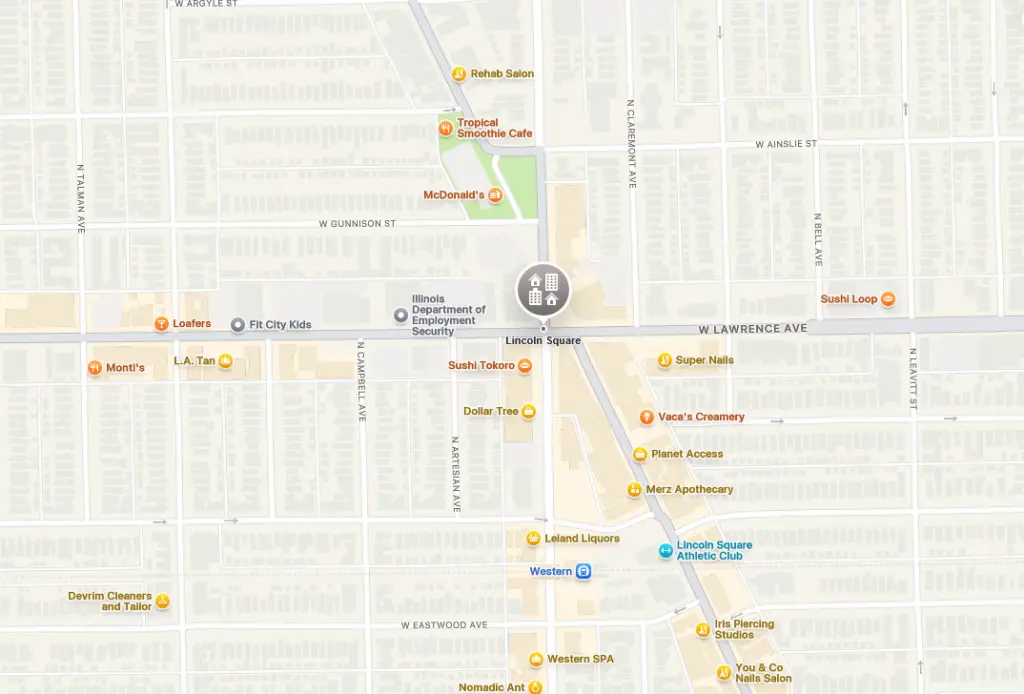
Lincoln Square is a charming and community-oriented neighborhood on Chicago’s North Side, known for its walkability, cultural heritage, and welcoming atmosphere. Located about 7 miles northwest of downtown Chicago, Lincoln Square is home to approximately 40,000 residents. With its mix of historic architecture, locally owned businesses, and lively public spaces, the neighborhood offers a small-town feel within a major city.
The history of Lincoln Square is closely tied to German immigration in the late 19th and early 20th centuries. Originally farmland and small settlements, the area developed rapidly after being annexed by Chicago in 1889. German immigrants shaped much of the neighborhood’s early character, establishing businesses, churches, and social clubs. This heritage is still visible today in landmarks such as the Dank Haus German American Cultural Center and traditional European-style architecture. Over time, Lincoln Square has evolved into a diverse and inclusive community while maintaining strong ties to its historical roots.
Lincoln Square is primarily residential, featuring a mix of housing options including brick two-flats, greystones, courtyard apartment buildings, and single-family homes. Tree-lined streets and well-preserved buildings contribute to the neighborhood’s inviting appearance. While home prices have increased in recent years, the area continues to attract families, young professionals, and longtime residents seeking a balance of urban living and neighborhood stability.
The neighborhood is known for its strong sense of community and civic engagement. Median household income is higher than the Chicago average, reflecting a stable local economy supported by professional, creative, and service-sector employment. Lincoln Square’s welcoming environment and emphasis on local connections make it especially appealing to families and those seeking a tight-knit community.
Education is a priority in Lincoln Square. The neighborhood is served by several well-regarded Chicago Public Schools, including Waters Elementary School, which is known for its arts-integrated curriculum, and McPherson Elementary School. High school students often attend Amundsen High School, which offers college preparatory programs and extracurricular activities. The neighborhood’s commitment to education is reflected in strong parental involvement and community support for local schools.
Lincoln Square’s economy is centered around small, locally owned businesses. The Lincoln Square commercial district along Lincoln Avenue features cafes, bookstores, restaurants, music shops, and specialty retailers. The neighborhood is also home to the Old Town School of Folk Music, a nationally recognized institution that offers music education and hosts performances that draw visitors from across the city. Weekly farmers markets and seasonal events further support local commerce and community interaction.
Recreation and culture play a major role in Lincoln Square’s identity. Welles Park serves as a central gathering place, offering sports fields, a fieldhouse, playgrounds, and community programs for all ages. Cultural festivals, outdoor concerts, and neighborhood celebrations take place throughout the year, reinforcing the area’s vibrant and inclusive spirit.
Lincoln Square has attracted artists, musicians, educators, and writers who are drawn to its creative energy and strong community values. While not defined by celebrity residents, the neighborhood’s influence is felt through its cultural institutions and grassroots organizations that shape daily life.
For those considering living in Chicago, Lincoln Square offers a rare combination of urban convenience and small-town warmth. With excellent schools, active public spaces, a thriving local business scene, and a deep sense of community pride, Lincoln Square stands out as a neighborhood where residents feel connected, to each other and to the city around them.