





















About Humboldt Park
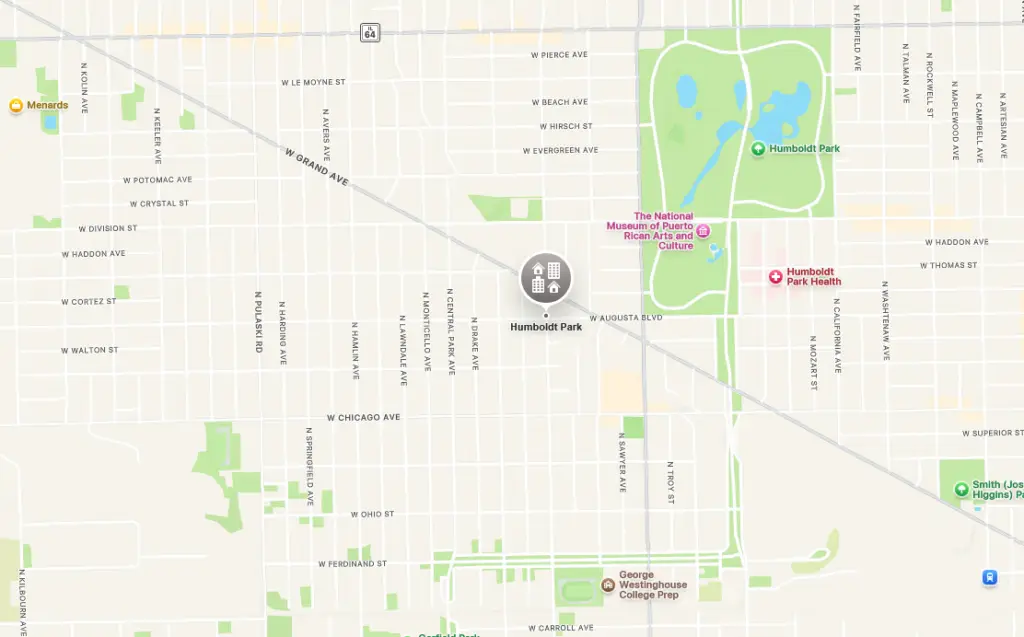
Humboldt Park is a culturally vibrant and historic neighborhood located on Chicago’s West Side. Home to approximately 55,000 residents, it is renowned for its strong Puerto Rican and Latino heritage, historic architecture, and community-centered atmosphere. The neighborhood is centered around the 207-acre Humboldt Park itself, offering green space, recreational opportunities, and a sense of identity for residents, while being about 6 miles west of downtown Chicago.
Humboldt Park’s history dates back to the late 19th century when it developed as a residential area for European immigrants, particularly Germans, Scandinavians, and Italians. By the mid-20th century, the neighborhood became home to a growing Puerto Rican population, shaping its cultural and social landscape. Today, Humboldt Park is celebrated for its Latino culture, community activism, and historic significance. Many buildings reflect early 20th-century architecture, including greystones, brick bungalows, and single-family homes.
Housing in Humboldt Park is diverse, with single-family homes, two-flats, apartment buildings, and townhouses. Tree-lined streets and historic properties give the neighborhood a strong sense of character. Housing affordability is moderate, making the area attractive to families, young professionals, and long-term residents. Homeownership rates are mixed, with a combination of long-term owners and renters contributing to the neighborhood’s dynamic population.
The neighborhood is culturally rich, with a majority Puerto Rican population alongside other Latino, African American, and immigrant communities. Median household income is slightly below the city average, reflecting a working- and middle-class demographic. Community organizations, cultural centers, and local businesses play a key role in neighborhood cohesion, supporting arts, festivals, and social services.
Education in Humboldt Park is served by Chicago Public Schools such as Ogden International School and Maria Saucedo Scholastic Academy, offering academic programs and extracurricular activities. Several charter and private schools also serve the community. Local schools often engage with cultural and arts programs that reflect the neighborhood’s heritage, fostering community pride and youth development.
Economically, Humboldt Park features local businesses, restaurants, and retail along major corridors such as Division Street, North Avenue, and Western Avenue. The neighborhood is known for its authentic Latin American cuisine, specialty shops, and cultural institutions that serve both residents and visitors. Many residents commute downtown or to other parts of Chicago via CTA buses, the Blue Line, and nearby expressways.
Recreation and green space are central to Humboldt Park’s identity. The park itself offers walking paths, playgrounds, athletic fields, lagoon areas, and cultural landmarks such as the National Museum of Puerto Rican Arts and Culture. Community events, festivals, and parades celebrate the neighborhood’s heritage and bring residents together, fostering a strong sense of belonging.
Humboldt Park is recognized for its vibrant cultural life, community activism, and historic preservation. Residents take pride in maintaining the neighborhood’s unique identity while welcoming new influences, making it a dynamic and resilient community.
For those seeking a culturally rich, historically significant, and active neighborhood in Chicago, Humboldt Park offers a combination of community engagement, local amenities, and green space. Its strong cultural identity, historic architecture, and family-friendly environment make Humboldt Park a desirable neighborhood on the city’s West Side.