





















About Irving Park
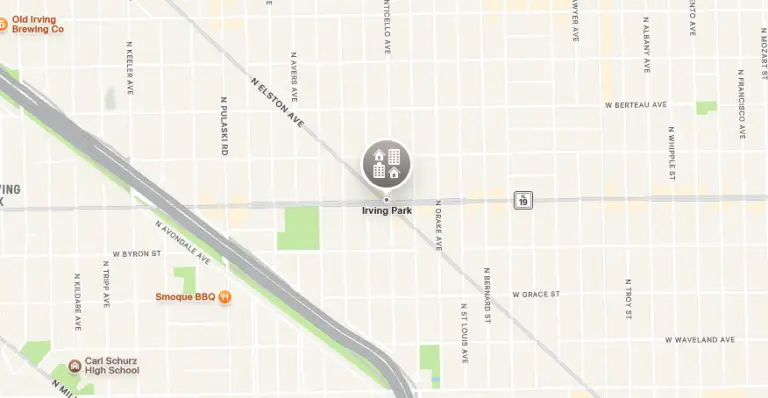
Irving Park is a well-established and diverse neighborhood located on Chicago’s Northwest Side. Home to roughly 55,000 residents, the area is known for its tree-lined streets, historic architecture, strong schools, and vibrant local culture. Situated approximately 10 miles from downtown Chicago, Irving Park offers a suburban-like atmosphere while maintaining easy access to the city, making it popular with families, professionals, and longtime residents.
The neighborhood’s history dates back to the mid-19th century when it was originally farmland. Residential development began in earnest in the early 20th century with the arrival of streetcar lines and commuter rail service. Irving Park was incorporated into Chicago in 1889 and grew rapidly as brick bungalows, two-flats, and single-family homes were built to accommodate a growing population. Many of these homes remain today, giving the neighborhood a distinctive architectural character.
Housing in Irving Park is diverse, featuring single-family homes, brick bungalows, two-flats, townhouses, and small apartment buildings. Tree-lined streets, well-maintained properties, and larger lots contribute to the neighborhood’s suburban feel. Homeownership is common, helping to maintain stability and pride among residents. Housing remains relatively affordable compared to other North Side neighborhoods, attracting families and professionals alike.
Irving Park is culturally diverse, with significant Polish, Latino, and Asian communities alongside long-standing European immigrant families. Median household income is around the city average, reflecting a mix of working- and middle-class households. The neighborhood’s diversity is celebrated through cultural institutions, local businesses, and community events that foster inclusivity and engagement.
Education is a central aspect of Irving Park. Chicago Public Schools in the area include Copernicus Elementary, Belding Elementary, and Taft High School, all offering strong academic programs and extracurricular opportunities. Several private and religious schools provide additional options for families, supporting the neighborhood’s reputation as family-friendly and education-focused.
Economically, Irving Park benefits from local businesses and retail along major streets such as Irving Park Road, Milwaukee Avenue, and Pulaski Road. Restaurants, shops, and services cater to residents’ daily needs. Many residents commute to downtown Chicago or surrounding suburbs using CTA buses, the Blue Line, or nearby expressways, making transportation convenient.
Recreation and green space are highlights of Irving Park. The neighborhood includes several parks, playgrounds, and athletic fields, including the large Independence Park nearby. Forest preserves and walking trails provide additional outdoor activities. Community events, festivals, and cultural gatherings help strengthen neighborhood ties and engagement.
Irving Park is characterized by strong community involvement, active block clubs, and a sense of civic pride. Longtime residents and newcomers alike contribute to a welcoming environment, making it a stable and family-oriented neighborhood.
For those seeking a residential, culturally rich neighborhood with convenient city access, Irving Park offers an appealing combination of historic charm, strong schools, local amenities, and community engagement. Its balance of suburban comfort and urban convenience makes it a desirable place to live on Chicago’s Northwest Side.