





















About Norwood Park
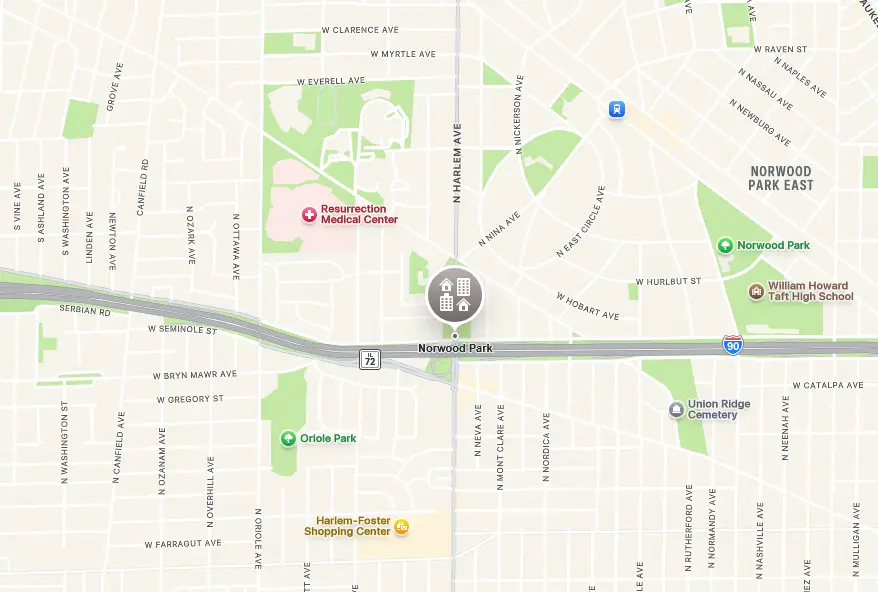
Norwood Park is a historic and residential neighborhood located on Chicago’s far Northwest Side. Home to approximately 40,000 residents, it is known for its suburban atmosphere, tree-lined streets, and strong sense of community, giving it a distinct “small-town” feel within the city of Chicago. The neighborhood is bordered by Edison Park, Jefferson Park, and the suburb of Harwood Heights, and it is roughly 13 miles from downtown Chicago, making it convenient for commuters while maintaining a quieter lifestyle.
Norwood Park’s history dates back to the mid-19th century when it was first settled as a farming community. It was officially incorporated as a village in 1874 and later annexed by Chicago in 1893. The neighborhood is celebrated for its historic architecture, including Victorian-era homes, Craftsman bungalows, and early 20th-century two-flats. Many of its residential streets retain the original character of the neighborhood, contributing to Norwood Park’s reputation as one of Chicago’s most charming historic districts.
Housing in Norwood Park is primarily single-family homes, with some small apartment buildings and townhouses. Its tree-lined streets, larger lots, and quiet blocks attract families, professionals, and longtime residents seeking stability within city limits. Homeownership rates are high, contributing to a strong sense of continuity and neighborhood pride. Compared to other parts of Chicago, Norwood Park is relatively affordable while still offering a suburban lifestyle.
The neighborhood has historically been middle- to upper-middle-class, with median household incomes above the city average. Norwood Park has maintained a family-oriented and community-focused atmosphere, with many residents living in the area for generations. Its demographics have gradually diversified over time, while the neighborhood retains its welcoming and tight-knit feel.
Education is a cornerstone of Norwood Park life. Chicago Public Schools serving the area include Ebinger Elementary School, Edison Elementary, and Taft High School, offering a range of academic programs and extracurricular activities. Families also have access to several nearby private and parochial schools, reflecting the community’s commitment to quality education.
Norwood Park’s economy is largely residential, supported by local businesses along major streets such as Northwest Highway, Milwaukee Avenue, and Devon Avenue. Restaurants, cafes, shops, and small professional offices serve the neighborhood’s daily needs. Many residents commute to other parts of Chicago or nearby suburbs for work, utilizing the Metra Union Pacific Northwest Line and nearby expressways.
Recreation and green space are highlights of Norwood Park. The neighborhood is home to several parks and playgrounds, including Norwood Park itself, which features sports fields, walking paths, and community programming. Forest preserves and nearby trails provide additional opportunities for outdoor activities and nature appreciation. Community events, seasonal festivals, and local clubs strengthen civic engagement and neighborhood cohesion.
Norwood Park has produced and attracted residents who value historic preservation, community involvement, and a high quality of life. Its historic district designation preserves the neighborhood’s character while encouraging ongoing neighborhood pride and stewardship.
For those seeking a stable, family-friendly neighborhood with historic charm and suburban comfort within Chicago, Norwood Park offers an ideal balance. With excellent schools, tree-lined streets, accessible parks, and strong community ties, it is a neighborhood that combines the best of city living with the feel of a close-knit village on Chicago’s Northwest Side.