






















About Rogers Park
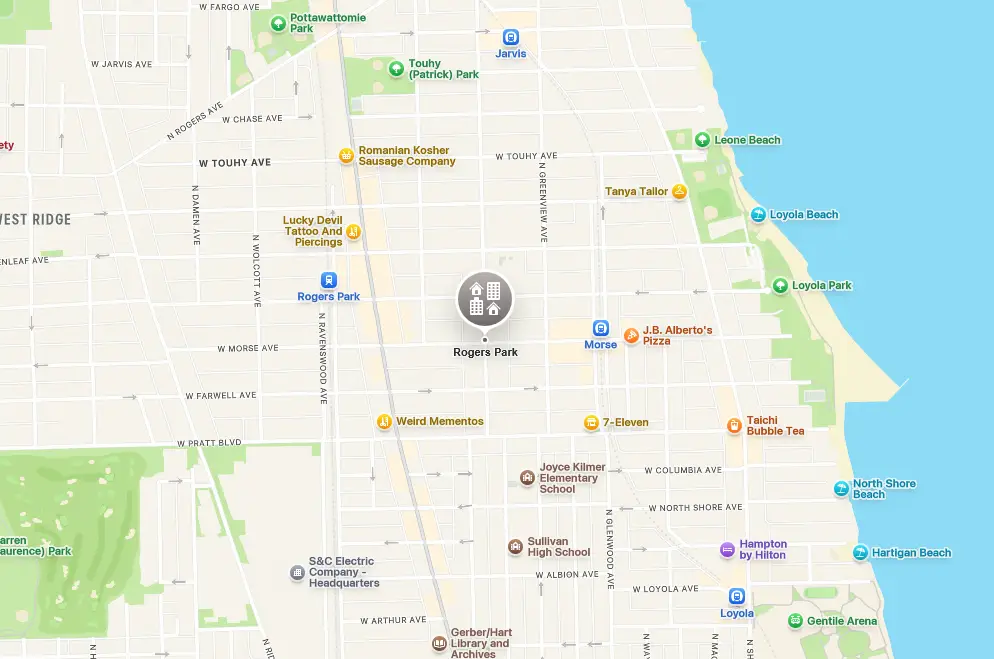
Rogers Park is one of Chicago’s most distinctive and diverse neighborhoods, located on the city’s far North Side along the shores of Lake Michigan. Known for its cultural richness, lakefront beauty, and strong sense of community, Rogers Park is home to approximately 55,000 residents. Its location—about 9 miles north of downtown Chicago—offers residents convenient access to the rest of the city while maintaining a neighborhood feel shaped by local businesses, tree-lined streets, and vibrant public spaces.
The history of Rogers Park dates back to the mid-19th century when it began as a small settlement outside the city. The neighborhood is named after Philip Rogers, an Irish immigrant who settled in the area in the 1830s. Rogers Park was officially incorporated into the City of Chicago in 1893, the same year as the World’s Columbian Exposition. The extension of streetcar and elevated train lines in the early 20th century fueled residential growth, transforming the area into a hub of apartments, courtyard buildings, and single-family homes. Today, Rogers Park features a wide mix of housing styles, from historic greystones and brick walk-ups to modern condominiums and high-rise apartments near the lake.
Rogers Park is widely recognized as one of the most diverse neighborhoods in the United States. Residents come from a broad range of racial, ethnic, cultural, and religious backgrounds, with strong immigrant communities from Africa, Asia, Latin America, the Middle East, and Eastern Europe. This diversity is reflected in the neighborhood’s restaurants, markets, cultural centers, and community organizations. Median household income is lower than the citywide average, but the neighborhood’s affordability compared to other lakefront areas makes it appealing to students, families, artists, and longtime residents alike.
Education plays an important role in Rogers Park. The neighborhood is served by Chicago Public Schools, including elementary schools such as New Field Elementary, Kilmer Elementary, and Rogers Elementary. High school students often attend Sullivan High School, which offers college preparatory and International Baccalaureate programs. Rogers Park is also home to Loyola University Chicago, a major Jesuit institution that significantly influences the neighborhood’s character. Loyola brings thousands of students, faculty, and cultural events to the area, contributing to its youthful energy and intellectual atmosphere.
Economically, Rogers Park benefits from a mix of local businesses, nonprofit organizations, education, healthcare, and retail. Small shops and restaurants line corridors such as Clark Street, Devon Avenue, and Howard Street, offering cuisines and goods from around the world. While many residents commute to other parts of Chicago for work, local employment opportunities are supported by Loyola University, schools, social service agencies, and neighborhood-based businesses.
Recreation and culture are central to life in Rogers Park. The neighborhood boasts several public beaches, including Loyola Beach, Hartigan Beach, and Juneway Beach, offering stunning views of Lake Michigan and access to swimming, walking paths, and outdoor relaxation. Parks such as Pottawattomie Park and Rogers Park Playlot provide space for sports, playgrounds, and community gatherings. Cultural organizations, theaters, and art spaces showcase local talent and celebrate the neighborhood’s multicultural identity.
Community engagement is a defining feature of Rogers Park. Neighborhood associations, block clubs, and nonprofit groups actively work to promote inclusivity, safety, and civic pride. Annual events, farmers markets, and cultural festivals bring residents together and strengthen connections across diverse backgrounds. Rogers Park’s tradition of activism and social awareness has long been part of its identity.
Rogers Park has also been home to notable individuals in the arts, politics, and academia, many connected to Loyola University or Chicago’s broader cultural scene. Writers, musicians, educators, and activists have all found inspiration in the neighborhood’s diversity and strong sense of place.
For those considering living in Chicago, Rogers Park offers a unique blend of affordability, lakefront access, cultural diversity, and community spirit. With excellent public transportation, vibrant local life, and a welcoming atmosphere, Rogers Park stands out as a neighborhood where people from all walks of life can find opportunity, connection, and a true sense of belonging.